


AI vs. Human Language: Why AI Will Never Fully Capture Human Communication?
Artificial Intelligence (AI) has made incredible strides in understanding and generating human language. From chatbots to virtual assistants, AI-powered tools can mimic human conversation, provide customer support, and even write articles. However, despite these advancements, AI will never fully capture human communication. Why? Because human language is deeply rooted in emotions, cultural contexts, creativity, and nuances that AI struggles to grasp.
This Blog explores the key differences between AI-generated language and human communication, highlighting why AI will always fall short of replicating human interaction entirely.
The Complexity of Human Language
AI Struggles with Context
Human communication is complex because it involves multiple layers of meaning. The same sentence can have different interpretations based on tone, context, and body language. AI models, no matter how advanced, struggle to:
- Understand sarcasm and irony.
- Recognize cultural references and humor.
- Adapt to shifting conversational tones.
For example, the phrase “Oh, great!” can be positive or sarcastic, depending on the situation. AI often fails to distinguish between these meanings.
AI Lacks Emotional Intelligence: AI vs. Human Emotions
Human conversations are driven by emotions. AI, however, lacks true emotional intelligence. While it can analyze words and assign sentiment scores, it does not “feel” emotions. This limitation affects:
- Empathy in conversations.
- Understanding subtle emotional cues.
- Adjusting responses based on a person’s mood.
A human can comfort a friend through genuine empathy, but AI can only generate pre-programmed responses.
Creativity and Storytelling: A Human-Only Domain
AI Cannot Think Creatively: AI and Creativity
Human storytelling is rich with imagination, emotions, and unique perspectives. AI, on the other hand, generates content based on patterns from existing data. This means:
- AI cannot create original ideas.
- It lacks personal experiences that influence storytelling.
- AI-generated stories often feel formulaic and predictable.
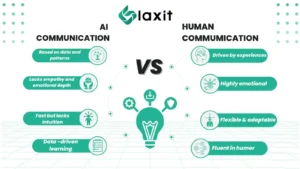
The Power of Personal Experiences Human Storytelling vs. AI
When humans tell stories, they draw from real-life experiences, emotions, and cultural backgrounds. AI can only regurgitate information, making it less authentic than human storytelling.
Comparison between AI & Human Creativity
| Feature | AI | Human |
| Originality | Limited to existing data | Infinite, based on experience |
| Emotional depth | Lacks real emotions | Deep emotional connection |
| Humor & sarcasm | Struggles with context | Naturally adapts |
| Cultural relevance | Often misinterprets | Deeply understands |
The Role of Cultural and Social Influences
AI Language Limitations
Human language is fluid. Slang, idioms, and cultural references evolve over time. AI models are trained on past data, meaning they struggle to:
- Keep up with new trends in language.
- Understand region-specific dialects.
- Interpret historical and cultural contexts accurately.
For example, phrases like “spill the tea” (meaning gossip) may confuse AI unless specifically trained on modern slang.
The Importance of Human Connection AI vs. Human Communication
Conversations involve more than just exchanging words—they include:
- Body language and facial expressions.
- Shared cultural understanding.
- Emotional connections that strengthen relationships.
AI lacks physical presence and the ability to read non-verbal cues, making it less effective in human interactions.
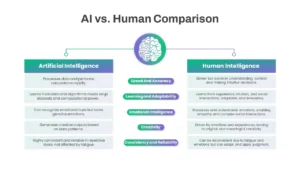
Ethical Concerns: Can AI Be Truly Responsible?
AI Can Be Biased
AI models are trained on existing data, which can contain biases. This leads to:
- Unintended discrimination in responses.
- Lack of inclusivity in AI-generated content.
Conclusion:
AI has revolutionized language processing, but it cannot replace human communication. Our ability to connect emotionally, create original stories, and adapt language based on context makes human interaction irreplaceable. While AI can enhance communication, it will always need human guidance to ensure meaningful, ethical, and culturally aware interactions.