

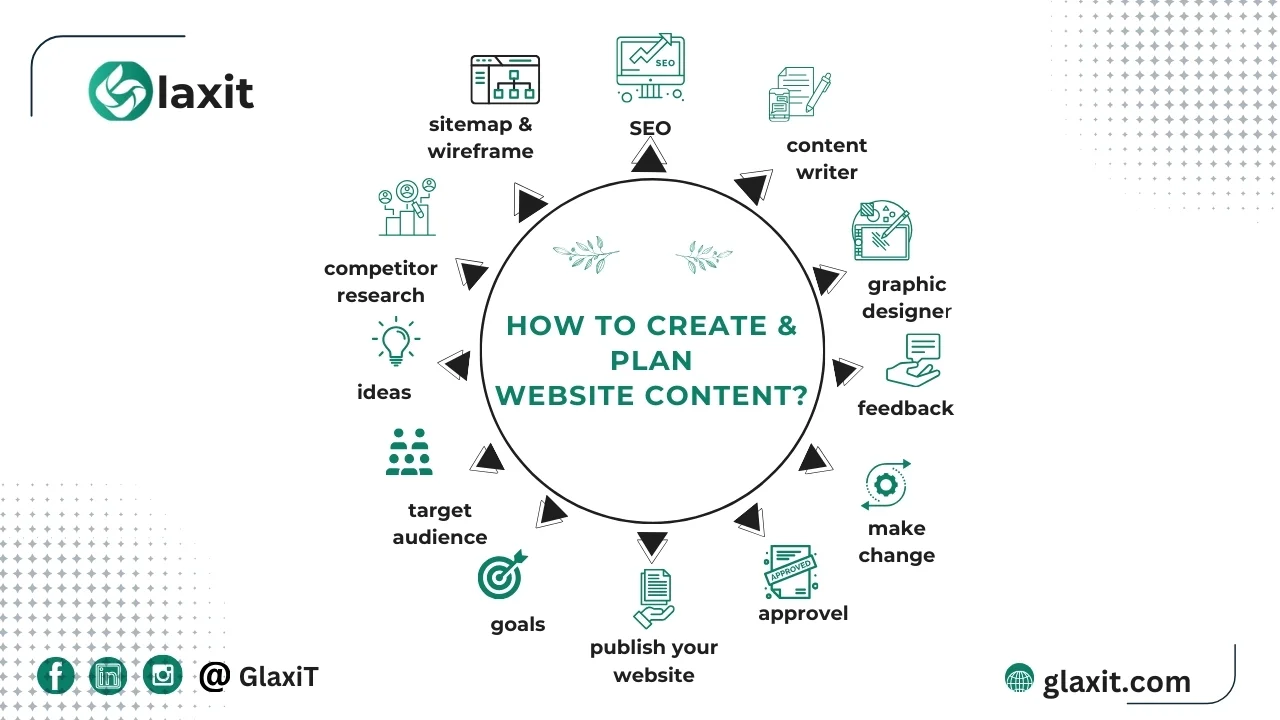
Effective website content is important for brand establishment, reaching target audience, and driving traffic. Whether launching a new or improving an existing one, planning and writing quality content is essential. Below is a guide on how best to create interesting, relevant, and valuable content to your website.
Step 1: Define Your Purpose and Audience
Before you start writing, it’s important to decide the goal and know your client requirements. Are you going to educate, entertain, or convince? This will inform you how to carry information and the overall tone and style of content. Is it a professional, student or a casual reader? It makes it easier for you to assume their needs and preferences and make content relevant and engaging.
Step 2: Conduct Keyword Research
SEO is an important feature as it assists your site gain the much-needed optimization on search engines such as Google. Try to focus on keywords that your target audience is most likely to use in your industry or specific business segment. SEMrush & Google Keyword Planner can help identify popular terms. To enhance your content’s visibility, incorporate these keywords while avoiding keyword stuffing.
Step 3: Create a Content Strategy
After understanding your audience and the keywords it is time to create your content. This involves deciding what type of content you need e.g., blog posts, landing pages, product descriptions. create a content calendar to keep yourself consistent and organized. Choose topics that answer the most frequent questions and concerns of your audience. Offer a mix of content types, such as how-to guides, case studies, customer testimonials, and videos to keep things interesting and cater to different preferences.

Step 4: Focus on Value and Readability
Good website content brings something of value. This means giving your audience useful and actionable information. Your purpose must be to contribute to solving a problem, presenting a solution, or presenting useful information.
For example: if you are writing a blog about digital marketing , focus on sharing tips that can help readers grow their businesses. Use headings, subheadings, and bullet points to write in a concise way and increase readability. Make sure important details are visible, and simplify difficult sentences with tools like Hemingway Editor.
Step 5: Write Engaging Headlines and Meta Descriptions
Your headlines are the first thing visitors come across while visiting your site. An interesting headline draws people’s attention and makes them feel like they want to read something. Meta descriptions are important in attracting users to your link in search results, highlighting the page’s value and encouraging clicks.
Step 6: Optimize for SEO and User Experience
Ensure that the targeted keywords are embedded in the right locations like the title, meta description, URL, and alt text of the images. Do not twist content for the sake of SEO. Algorithms of Google are becoming more sophisticated and now search ranking prefers that content writing is primarily for the users. In addition to on-page SEO, ensure your website is easy to navigate. A clean, & professional site design enhances UX and contributes to longer visits and customer conversion. Make sure to use clear call to actions (CTAs) so that your visitors know where to go next, whether that’s subscribing to your newsletter, making a purchase or contacting you.
Step 7: Edit and Proofread
Even the best writers make mistakes, so take the time to edit and proofread your content. Look for grammar, spelling, and punctuation misspelling. Reading through your speaking content is advised to identify any stuck points or areas for improvement. You can also use other writing tools like Grammarly for further proofreading.
Step 8: Measure and Improve
After posting your content, it is recommendable to monitor this by use of Google analytics. In this way we will explore turn rates, conversion rates, time per visit, body, and bounce rates to determine the efficiency of the content. This data can be used to make changes to the content as well as better for foreseeable writing skill.
| Steps | Key Facts | Impacts |
| Define Your Purpose & Audience | 80% of customers are more likely to buy from a brand that offers personalized experiences. | Understanding your audience ensures relevant and engaging content. |
| Focus on Value & Readability | Content that is easy to read improves user engagement by up to 40%. | Enhances user experience and reduces bounce rates |
| Write Engaging Headlines & Meta Descriptions | Headlines with numbers have a 36% higher click-through rate. | Catchy titles encourage clicks, boosting website traffic. |
| Measure & Improve | Websites that analyze and adjust content regularly see up to a 30% improvement in performance metrics. | Continuous improvement ensures content stays effective and relevant. |
Conclusion:
Planning and writing website content is not just about filling up space on your pages. It is about creating highly relevant, entertaining, and valuable message that gets to the target market. By outlining your mission, identifying keywords, developing a plan, and search engine optimization, you can create a website that not only looks great but also performs well. Start by focusing on your audience’s needs and continuously measure and improve your content to ensure it meets those needs effectively.