

How AI is Changing Supply Chain Management & Logistics
In today’s fast-changing world, artificial intelligence (AI) is making supply chains better and smarter. AI helps businesses manage inventory, predict customer needs, and improve customer service. Most of the companies are using AI for the management of supply chains. A McKinsey study found that about 73% of supply chain managers believe AI will be important to their work by 2025.
Why AI becoming so popular? There are a few key reasons:
- Better Visibility: AI gives real-time updates so businesses can spot and fix problems before they become big issues.
- Smoother Operations: AI helps companies manage inventory, plan transportation, and schedule deliveries efficiently.
- Improved Customer Service: AI predicts customers’ needs, tracks orders, and quickly solves customer problems.
How AI Makes Supply Chain Management More Efficient
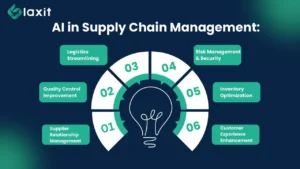
AI can help companies avoid running out of stock or having too much inventory. It tracks trends and adjusts stock levels accordingly, which means fewer shortages and less wasted stock.
AI also speeds up deliveries. By planning the best routes, AI reduces transportation costs and improves delivery times, making production and distribution more efficient and cost-effective.
How AI is Used in Supply Chain
AI helps businesses manage their inventory better. Companies like Amazon use AI to ensure they always have the right products in stock. For example, Amazon uses AI to predict demand based on past purchases, seasonal trends, and market patterns.
This helps them:
- Save money by avoiding extra storage costs.
- Keep customers happy by making products according to customer demands.
- Increase sales by identifying popular products and restocking them in time.
Predicting Demand with AI
AI helps companies predict what products will be popular. Walmart, for example, uses AI to analyze past sales and social media trends, ensuring it stocks the right amount of popular items. Walmart can:
- Lower costs by avoiding unnecessary stock.
- Improve customer satisfaction by keeping popular items available.
- Boost sales by quickly responding to trends.
The Benefits of AI in Supply Chain
AI is changing how businesses manage their supply chains, making them more flexible and reliable.
- More efficiency: AI makes managing stock and deliveries easier.
- Lower costs: AI helps companies save money on operations.
- Better customer service: AI tracks shipments and predicts issues before they happen.
- Faster responses: AI helps businesses quickly react to market changes.
- Stronger supply chains: AI helps companies prepare for disruptions and create backup plans.
Challenges of Using AI in Supply Chain
Even though AI is helpful, it also comes with challenges:
- Needs lots of data: AI works best with large amounts of information, which some companies don’t have.
- Requires tech skills: Companies need experts to set up and maintain AI systems.
- Expensive to start: AI tools can be costly, making it harder for small businesses to use them.
- Employees need training: Workers must learn how to use AI tools effectively.
What’s Next for AI in Supply Chain?
AI will continue to improve supply chain operations. Some exciting future developments include:
- Robots in warehouses: AI-powered robots will help sort and pack products.
- AI-powered customer service: Virtual assistants will answer questions and solve issues.
- More intelligent demand predictions: AI will help companies better plan inventory and reduce waste.
- Self-driving delivery trucks: AI will make deliveries cheaper and faster.
- Blockchain and AI together will improve supply chain security and tracking.
Glaxit: Leading the Way in AI for Supply Chain Management
Glaxit uses AI to make supply chain & logistics smarter and more efficient. With Robotic Process Automation (RPA), Glaxit helps businesses speed up order processing, cut costs, and improve performance. By combining AI with logistics and inventory management, Glaxit supports e-commerce and B2B companies with advanced technology that promotes productivity sustainability. Let’s connect with Glaxit to upgrade the supply chain with AI-powered chatbots, & RPA services.
Conclusion:
AI continuously innovates AI in supply chain management by making processes smoother, cutting costs, and improving customer service. While some challenges, like data shortages and high costs, can slow things down, AI finds new ways to improve logistics and inventory. As technology grows, AI tools will make supply chains stronger and more flexible. Businesses that embrace AI will stay ahead and succeed in the competitive market.